Greater Montréal Giving Guide

« There is nothing more rewarding than being able to see and recognize one another… to have access to a different possibility, and to be able to contribute to it.»

As democratic institutions are challenged and inequalities grow, our ability to act together depends on the trust and connections we build. Community spaces bring people together, foster belonging, and create opportunities to share experiences, imagine solutions, and mobilize for lasting change.

This year, a record number of 476 organisations and community groups responded to the Foundation of Greater Montréal’s call for proposals for the 2026–2027 Collective Fund for Social Equity

Across the Montreal Metropolitan Community, these organizations are building and sustaining spaces where people facing systemic discrimination — racism, ableism, sexism, homophobia, transphobia, Islamophobia, and more — can rest, heal, connect, and mobilize. These spaces nurture solidarity, strengthen bonds, and open doors for dialogue and collective action with other communities. 
♦ Healing Spaces are places of safety, mutual support, and shared knowledge where community members come together to heal, learn from one another, and rebuild connection

Recipient of the 2026–2027 Collective Fund for Social Equity

Tlachiuak – Atelier Solidaire is a safe cultural and artistic space created by and for Indigenous people experiencing homelessness in Montreal. Rooted in the Indigenous philosophy of the seven generations and participatory governance, the organization builds a solidarity economy through the sale of artworks. It champions dignity, healing, and empowerment for participants while nurturing cultural reconnection and peer support.

« Many people still don’t believe that art is work. For us, however, creating, selling our work and making a living from it is a real way to survive, to support ourselves and to move forward. »

Harambec is a Black feminist collective dedicated to creating the conditions for a life of dignity, in radical opposition to erasure, dispossession, and exploitation. The Hibiscus Initiative is a peer-led co-learning space for young Black girls and non-binary people. Through a youth-led approach, participants identify priority themes, propose activities, and gradually take on active roles in running the group. The adult team facilitates a safe environment, centering the knowledge and experiences of the young people.

The Vietnamese Community Resource Centre creates a collective space for intergenerational renewal for adult and ageing Vietnamese women. This initiative helps to break linguistic and cultural isolation, fosters intergenerational knowledge-sharing, and promotes active citizenship. Through trust-building, storytelling, and dialogue, 18–22 women collaboratively develop workshops on their rights, history, and capacity for action.

« By speaking about ourselves, we rediscover — we assert — our voice. »

Inclusion Sport is a self-managed community organization comprising two grassroots self-defense collectives: the Réseau d’autodéfense féministe (RAF) and the Black Flag Combat Club (BFCC). It offers martial arts and self-defense workshops at all levels, grounded in social justice, particularly for trans and queer people and those from marginalized communities. Run almost entirely by volunteers, the organization combines affordability, collective governance, community empowerment, and solidarity through martial arts. 

Recipient of the 2026–2027 Collective Fund for Social Equity

The WORD (Writing Our Rhythms Down) project harnesses hip-hop as a tool for literacy and youth engagement in Côte-des-Neiges. Through its summer artist-in-residence program, WORD supports young people in vulnerable circumstances through digital music creation, mentoring, and academic support. The initiative creates a safe space, enabling young people facing systemic barriers – such as poverty, racism, homophobia, and involvement with youth protection services – to access a state-of-the-art recording studio. Through a community support network, the program helps young people find their voice, build self-confidence, and develop a stronger sense of belonging. 

« What really matters to me is sustainable funding. And then, quality jobs. And artistic development as a means of fostering a sense of belonging. »

Canadian Youth Development (CYD) is a community center in Montreal’s West Island, serving young people, families, and seniors through cultural, educational, and social initiatives. In an intergenerational, volunteer-led setting, CYD fosters a sense of belonging, self-confidence, and community ties. Its flagship project, Badiil (“the alternative”), empowers young people through three pillars: literacy, critical thinking, and sustainability. Through books, workshops, mentoring, and hands-on community projects, Badiil encourages young people to develop confidence, address systemic barriers, and drive positive change. Together, CYD and Badiil create an inclusive, youth-led environment where community members can learn, connect, and grow. 

The Indigenous Support Workers Project is a Montreal-based organization run by and for Indigenous people who are experiencing or have experienced homelessness. Through harm reduction, relationship-building, cultural safety, and community care, the ISWP advances a model where Indigenous workers and peers lead awareness-raising, advocacy, and leadership development initiatives. Rooted in decolonial and community-based practices, ISWP is developing a land-based healing initiative to support frontline workers struggling with burnout and compassion fatigue. 

« It is a space that allows people to experience healing — from the things they go through, such as violence, racism and exclusion — to rebuild the bonds that intergenerational trauma, colonial violence and capitalism have eroded. »

Biquette-Écopâturage runs urban eco-grazing projects across Greater Montreal to make urban agriculture, environmental education, and well-being accessible to all. Guided by its mission to “graze, educate, and brighten up,” the organization creates free, inclusive community spaces. Its activities – free-range sheep grazing in public parks, weekly educational workshops, and family activities – are made possible by an intergenerational group of dedicated volunteers. By focusing on sustainable environmental and social impact, Biquette breaks down social isolation, promotes civic engagement, and democratizes access to nature in urban settings. 

Recipient of the 2026–2027 Collective Fund for Social Equity

The Black and Indigenous Harm Reduction Alliance is a community collective that advances a holistic, self-determined approach to health and peer support within Black, Indigenous, and racialized communities in Tiohtià:ke/Montréal. The Alliance’s project, the Indigenous Sex Work and Art Collective, is the only collective space in Montréal created by and for Indigenous sex workers and artists. The collective’s work builds safer communities through harm reduction and mutual support, providing a space where Indigenous sex workers can share their experiences and heal through art, ceremony, and collective care. 

« One way to make our safe spaces even safer is to incorporate art as a means of expressing things that are difficult to talk about. »

Organisation WECAN supports the Afro-descendant arts entrepreneurs and incubates promising artistic and cultural initiatives. One such initiative, “J’ai le Mindset qui Bug,” is a six-episode podcast created by, for, and with neurodivergent Black young people aged 12–18. This project aims to break down taboos surrounding neurodiversity in communities of African descent by providing a safe space for dialogue. The episodes, available in LSQ and with audio description, will reach over 50,000 young people across Quebec. 

À nos prothèses is an inter-disability collective of artists from Greater Montreal that transforms accessibility challenges into a driving force for creativity, mutual support, and innovation. Founded in 2023, the collective unites deaf, blind, neurodivergent, and mobility-impaired artists through artistic projects, workshops, exhibitions, and professional development initiatives. It offers a space designed by and for artists with diverse abilities, combining training, mentoring, accessible tools, and care practices.  

« There is a whole world where people talk about disability, about people ‘with disabilities’. Here, on the contrary, it is really about interdependence and the ecosystem — about becoming aware of our capabilities, of what we can increase or reduce, and about being interdependent so that life is richer, fairer and more nourishing.»

♦ Mobilization Spaces are created by and for the community. They focus on popular education, building solidarity, growing leadership, and defending collective rights. 

Ex Aequo is a Montreal-based organization dedicated to defending the collective rights of people with disabilities. Its campaigns address accessible public transportation, housing, the rights of parents with disabilities, food security, and the direct participation of people with disabilities in social and political life. By creating spaces for equitable consultation, building members’ capacity, and supporting collective action, the organization reduces isolation, strengthens the collective power of disabled communities, and advances universal accessibility. 

Recipient of the 2026–2027 Collective Fund for Social Equity

La Gang à Rambrou is a community space where people with intellectual disabilities or autism are recognized for their talents and contributions. The organization uses art as a tool to empower participants and offer them opportunities to develop their leadership and facilitation skills. Rambrou’s programs offer hands-on training in workshop facilitation, technical skills, and communication, and open doors to paid work in the arts and culture sector. 

The Mouvement Jeunesse Montréal-Nord’s Café-Jeunesse Multiculturel is a youth-led organization with a particular focus on the participation of the young people in Montréal-Nord who face racial profiling, criminalization, and social exclusion. The project creates a collective space where youth can learn about their rights, develop their ability to express themselves, and become leaders in their communities. Driven by an approach “by and for young people,” the initiative empowers participants, supports families, and fosters a more equitable dialogue with local institutions. 

« Dialogue isn’t just about sitting down together… it’s about changing behaviours… »

The Plateforme pour l’auto-détermination des personnes racisées en recherche (Platform for the Self-Determination of Racialized People in Research) is led by Black and racialized women and gender minorities working to advance self-determination in research. One of its key initiatives is a community ethics support program that guides research conducted by, for, and with racialized communities. The project includes community consultations and the development of a long-term ethical framework that recognizes and strengthens community leadership alongside academic guidelines. 

Recipient of the 2026–2027 Collective Fund for Social Equity

Community-University Research Exchange (CURE) Montreal facilitates exchanges between the academic community and social and environmental justice groups. The Estran Project, a collaboration between CURE, the Trans Patients’ Union, and the Coalition of LGBTQ+ Youth Groups, aims to improve access to gender-affirming care for trans, non-binary, and intersex people in Montreal and across Quebec. The project is developing community-defined standards of care and building a bilingual digital platform designed by trans people, centralizing trans-friendly health resources in a searchable database to make access to care faster, more supportive, and more transparent. 

The Montreal Chinatown Round Table is a neighborhood action organization and community coordinating body rooted in social justice, anti-oppression and community development. In the context of rapid gentrification and rising tensions and inequalities in Montreal Chinatown, the Roundtable wants to create a local action and advocacy hub, The hub will train and equip the next generation of community organizers and strengthen intergenerational and interracial solidarity in the neighborhood, while placing the most marginalized residents at the centre.  

« What we need is a care infrastructure — a safety net that people can always rely on, so that they know they are not alone. If we want activists to continue their work, they must know that they have support, protection and a solid foundation behind them. »

The Sisters of Perpetual Indulgence of Montreal is a volunteer-run activist collective that works with LGBTQ+ communities through awareness-raising, mutual aid, and social justice approaches. Their new project focuses on improving accessibility of activist spaces in LGBTQ+ community to deaf and hard of hearing activists and making sign language interpretation more available at community activities and governance forums. The project seeks to foster fuller, more equal participation — and to create a ripple effect that normalizes linguistic and cultural accessibility in community and activist circles. 

The Centre International Désir Et Agir is an intergenerational organization dedicated to combating all forms of injustice, inequality, and discrimination through education, the arts, culture, and public awareness. In collaboration with its partners, CIDEA has launched an anti-racist literary podcast project created by young people for young people in the Black community. The initiative seeks to raise awareness among youth and the broader public about racism and social discrimination through the lens of literature, using podcasting as a digital medium that resonates with today’s generation. 

Recipient of the 2026–2027 Collective Fund for Social Equity

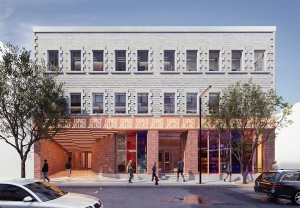
LGBTQ2+ Vaudreuil-Soulanges is a recently established community organization founded in 2022 to address the shortage of resources available to LGBTQ2+ individuals in a rapidly growing region on Montreal’s South Shore. Emerging from a grassroots initiative that brought together committed residents alongside community and institutional partners, the organization provides awareness-raising activities, intervention and referral services, and support groups for both youth and older adults. Its long-term vision is to secure a permanent location and establish a dedicated LGBTQ2+ community centre in Vaudreuil-Soulanges. 

« The more allies we have, the more people there are to raise awareness amongst others, the less hate speech there will be.»

Espace LGBTQ+ brings together LGBTQIA2S+ organizations from across Québec to foster the sharing of resources, expertise, and knowledge. Its Espace + Village project will become Québec’s first LGBTQ+ community centre and the first French-speaking centre of its kind in North America. It will host a dozen organizations providing health and social services, advocacy, and cultural programming for diverse LGBTQIA2S+ communities, while creating a safe, welcoming, and inclusive space in the historic heart of Montréal’s Village. 

Recipient of the 2026–2027 Collective Fund for Social Equity

PINAY Québec primarily supports Filipino migrant women and is now expanding its services to immigrant workers more broadly. Through the SAMAHAN Space initiative, a community hub for support, mutual aid, and collective action, the organization aims to respond to community-identified needs, particularly in the areas of immigration, health, housing, and labour rights, while strengthening participants’ leadership skills. The initiative seeks to build a better-informed, more self-reliant, and engaged community, while increasing its capacity to advocate collectively for its rights. 

« We want change to come from within. Our aim is for participants to feel empowered, rather than passive, and to be fully invested in this initiative and in their own development. »

Recipient of the 2026–2027 Collective Fund for Social Equity

Forum jeunesse Saint-Michel is an organization that mobilizes young people in the Saint-Michel neighbourhood to promote civic engagement and tackle poverty, racial exclusion, and racism. The Forum is launching an initiative designed to empower racialized youth and young people from immigrant backgrounds in responding to racial profiling and discrimination. The project combines the collection of personal testimonies with legal and psychosocial training, alongside the production of short videos and podcasts inspired by lived experiences. Its goals are to equip young people with practical knowledge and tools, break the silence surrounding discrimination, encourage incident reporting, and raise awareness among parents, schools, and the wider public. The initiative is grounded in meaningful youth participation, strong legal partnerships, and broad public outreach. 

♦ Cultural Spaces bring people together through the arts, storytelling, and the sharing of culture. They foster connection, strengthen identity, and support community engagement. 

Recipient of the 2026–2027 Collective Fund for Social Equity

Turtle Island Theatre is a performing arts and community development organization based in Kahnawà:ke. It offers theatre training and opportunities to create and perform to community members of all ages, from children to elders. Beyond producing plays and musicals, the organization plays a tangible role in youth development and cultural preservation, maintaining a safe, inclusive, and welcoming environment where people from all walks of life can explore their creative potential and affirm their identity. By presenting works that reflect the community’s culture, interests, and values, Turtle Island Theatre strengthens cultural identity, fosters community engagement, and contributes to the artistic vitality of Kahnawà:ke. 

« Theatre can really help someone flourish and move forward in life. Especially when you’re Indigenous and have to face all these challenges, it really helps us make our voices heard and understand who we are, whilst keeping an open mind. »

Recipient of the 2026–2027 Collective Fund for Social Equity

Geordie Theatre is an English-language theatre company specializing in productions for young audiences. Its Indigenous Arts Development Program develops theatre programming and arts education activities in partnership with young people from Kahnawà:ke and Kanehsatà:ke, ensuring that Indigenous stories are told by and for Indigenous communities. Through ongoing co-creation, feedback, and community engagement, the program engages young people as storytellers, supports emerging Indigenous artists, and trains community leaders — making theatre a sustainable tool for healing and leadership development. 

Compagnie Théâtre Créole is a Montreal-based arts collective led by and for francophone artists of African and Caribbean descent. With few accessible cultural spaces outside downtown Montreal, the organization is building a “third place” on Jean-Talon East, in the southern part of the Saint-Léonard neighbourhood, to bring art and culture to underserved communities. The new space will host performances and activities for all ages, as well as mentoring and incubation programs for artists of African descent and people of colour. The initiative uses the performing arts to address social issues, support self-expression, and empower the community — while giving greater visibility to artists from diverse backgrounds. 

♦ Civic Engagement Spaces help people build the skills, confidence, and relationships they need to shape their communities. through popular education and hands-on democratic practice.

The Yellow Door is a Montreal-based organization that fosters intergenerational connection and combats social isolation among older adults. Through its VoisinAge project, it supports older adults living in social housing in the city centre — often isolated, living on low incomes, and from diverse linguistic communities — in setting up residents’ committees and building their capacity for collective action. Through regular visits, organized activities, and support for collective action, the project aims to strengthen civic participation, improve living conditions, and empower residents to voice their own needs and propose their own solutions. 

Recipient of the 2026-2027 Collective Fund for Social Equity

NDG Community Council is a charitable, community-based organization that has been rooted in the Notre-Dame-de-Grâce neighbourhood for over 80 years. Faced with recurring emergencies that affect the neighbourhood — floods, power outages, heatwaves — the Council works to strengthen resilience, solidarity, and the capacity to act collectively. Its current initiative aims to establish local support networks in seven vulnerable areas, enabling residents to share information, build trust, and respond quickly, compassionately, and in a community-led way. 

« Everyone is capable of being part of a mutual aid network and becoming an important part of their local neighbourhood. »  

The Table de quartier Montréal-Nord (Montréal-Nord Neighbourhood Council) mobilizes residents, community organizations, institutions, and economic stakeholders to take collective action on the neighbourhood’s development. As part of the Montréal-Nord Social Development Plan, the Council hosts annual citizens’ assemblies — forums where residents can track the plan’s progress and help shape its future direction. 

The Roussillon Community Development Corporation (CDC) is a multisectoral group of community organizations working to combat poverty and social exclusion in one of the fastest-growing regions on Montreal’s South Shore. Its project — a laboratory for citizen participation and popular education — aims to strengthen mobilization, dialogue, and co-creation practices across the Roussillon RCM. Building on existing initiatives and proven outreach approaches, the project responds to the need for more inclusive participation, greater accessibility, stronger support for marginalized communities, and the creation of counter-narratives in the face of social polarization. 

« There is a genuine desire to re-establish civic and democratic mechanisms within our local institutions… we want to contribute to these fundamental changes. » 

Récipiendaire du Fonds Collectif pour l'équité sociale 2026-2027

Femmes en emploi is a Laval-based organization founded by women of African descent who wanted to create a warm, welcoming space offering support and personal development for Black immigrant women facing barriers to social and professional integration. Its project, the Laval Intercultural Circle — Dialogues and Collective Leadership, creates a structured, safe, and inclusive space for dialogue for Black women, immigrant women, and women from all backgrounds in Laval. In a context marked by polarization, isolation, and discrimination, the initiative offers 12 circles per year addressing issues such as microaggressions, employability, civic participation, and leadership. 

Effervescence citoyenne is a resident-led collective active in Montreal’s Centre-Sud and Hochelaga-Maisonneuve neighbourhoods. Its mission is to support grassroots action and strengthen the social fabric, sense of belonging, and resilience of local communities. The collective runs four main projects: a monthly community calendar, a bimonthly zine devoted to solutions journalism, inclusive neighbourhood events, and an incubator for emerging grassroots initiatives. Its long-term vision is to build model neighbourhoods for civic participation and social diversity — places where residents, especially those from marginalized communities, feel empowered and connected through a strong network of mutual support. 

« Our main objective is precisely to empower people in the neighbourhood. »

Promoting Leadership for Empowerment, Development and Social Justice (PLEDJ) is a Montreal-based non-profit organization dedicated to driving social change. It fosters leadership within Indigenous and marginalized communities locally and across the Global South, promoting empowerment, development, and social justice. PLEDJ‘s “Solidarity Dialogues” initiative, based in Montreal, trains leaders from diverse backgrounds — faith communities, academia, Indigenous groups, and civil society — to facilitate structured dialogues that combat polarization, racism, and social division. Following a successful pilot project that led to 10 community-led initiatives, the program is now expanding to francophone communities in Montreal and Quebec City, with pilot projects planned for Toronto and Vancouver. 

The Batshaw Youth & Family Centres Foundation’s mission is to empower vulnerable children, young people and families in the care of Quebec’s Youth Protection Services by providing them with funding, tools and opportunities so that they can realize their potential. The youth-led Solidarity Fund, established by the Foundation, will give real decision-making power to young people aged 14 to 29 who have been in the care of Youth Protection Services. The youth will collectively set funding priorities, define transparent decision-making processes and manage a fund designed to support young people covered by Quebec’s Youth Protection Act, particularly those who are currently in care or have been in the past, across the Greater Montreal area. 

« We talk about making a difference, and then we take action. » 

♦ Civic Engagement Spaces help people build the skills, confidence, and relationships they need to shape their communities. 

Recipient of the 2026–2027 Collective Fund for Social Equity

The Association of People Who Have Become Deaf and the Hard of Hearing in Quebec (Association des devenus sourds et des malentendants du Québec) in the L’Assomption and Les Moulins MRCs supports people with hearing loss in the Lanaudière region by providing welcoming and accessible spaces that foster mutual support, civic participation and empowerment. The organisation helps to break down social isolation and raise awareness of the realities of hearing loss. In collaboration with the community, local authorities and various public partners, the ADSMQ contributes to the development of more inclusive environments that are better suited to the needs of people living with hearing loss. 

« Hearing loss affects every aspect of life. There is still much work to be done to build a more inclusive society and ensure the meaningful civic participation of people with hearing loss. »

The Quebec Board of Black Educators is an education and research institution committed to raising awareness on educational bias and provide academic and social support to English-speaking Black children, youth, and families. The aim of the QBBE anti-racism helpline is to prevent situations of discrimination in schools from escalating to the youth protection system or the media. Drawing on 50 years of expertise in school-family mediation, the initiative offers intervention services, workshops to help parents navigate the Quebec school system, support for young people and building a network of ambassadors.  

Recipient of the 2026–2027 Collective Fund for Social Equity

Disarm the Dark is a Montreal-based organisation that combats human trafficking by developing a non-carceral, evidence-based and community-led approach. Its project, the Montreal Anti-Trafficking Collective, brings together Indigenous organizations, harm reduction groups, youth services, migrant rights advocates and survivors to better coordinate local responses to human trafficking situations and support to survivors.  

The Observatoire pour la justice migrante is an independent non-profit organization that bridges academia and civil society to protect and advance the rights of migrants in Quebec. The organization is dedicated to documenting systematic inequalities, analyzing migration policies, providing evidence-based resources, and supporting grassroots advocacy that challenges the prevalent immigration discourse. Observatoire engages artists and civil society actors in co-creating alternative narratives that center the rights and dignity of the migrants, and “welcome capacity” of the local communities.  

« We ensure that the most vulnerable and marginalised people have a say and are at the heart of the projects, whilst maintaining an intersectional perspective and bearing in mind that some groups face even greater marginalisation than others. »

Recipient of the 2026–2027 Collective Fund for Social Equity

The Quebec Network for the Support of Migrant Agricultural Workers (Réseau d’aide aux travailleuses et travailleurs migrants agricoles du Québec – RATTMAQ) is an organization defending the rights of temporary foreign workers across Quebec, primarily in agriculture and food processing industries. It creates spaces for democratic participation on Montreal’s South and North Shores, where workers can shape the demands, strategies, and rights-based actions that affect them — through committees and discussion groups tailored to their circumstances. Grounded in social justice and building upon a strong grassroots base, the network strengthens the collective agency of workers facing isolation, precarious migration and employment status, and significant language barriers.

Remerciements  

The Foundation of Greater Montréal is deeply grateful to our community for making the 2026–2027 Collective Fund for Social Equity possible, especially to the organizations, collaborative groups and citizens who participated in developing the Fund’s framework, and the 476 organizations and collectives that responded to its call for initiatives. 

Our heartfelt thanks also go to every individual donor to the Fund, as well as to the members of its advisory committee:

  • Anne Loranger-King, Mission Inclusion
  • Audrey-Lise Benoit, Hoodstock
  • Bureau des affaires publiques de la Communauté Baha’ï du Canada
  • Désirée Duchesne, Projets autochtones du Québec/Espace LGBTQ+ 
  • Dina Husseini, Ville de Montréal
  • Grace Laing Hogg, Fondation de la famille George Hogg
  • Hanya Omar, PLEDJ
  • Lévis-Simon Carpentier, Ex Aequo
  • Richenda Grazette, Fondation Dents-de-Lion
  • Pilar Hernandez Romero
  • Sofia Scuralli, Direction de la santé publique
  • Tamara Pierre-Louis, Sommet des jeunes Afro 
  • Vincent Chapdelaine, Projet Collectif